
What Survives Each Stage
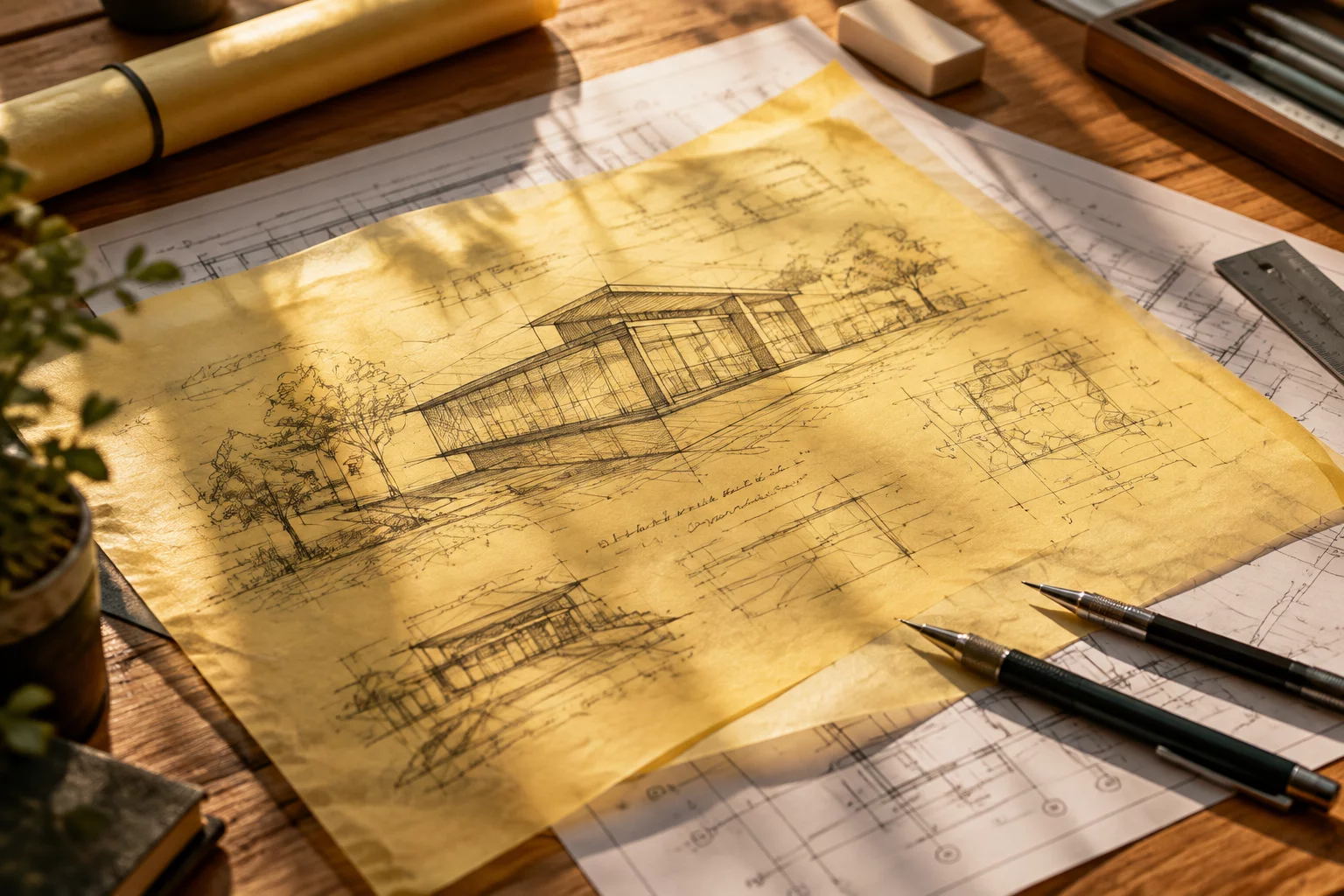
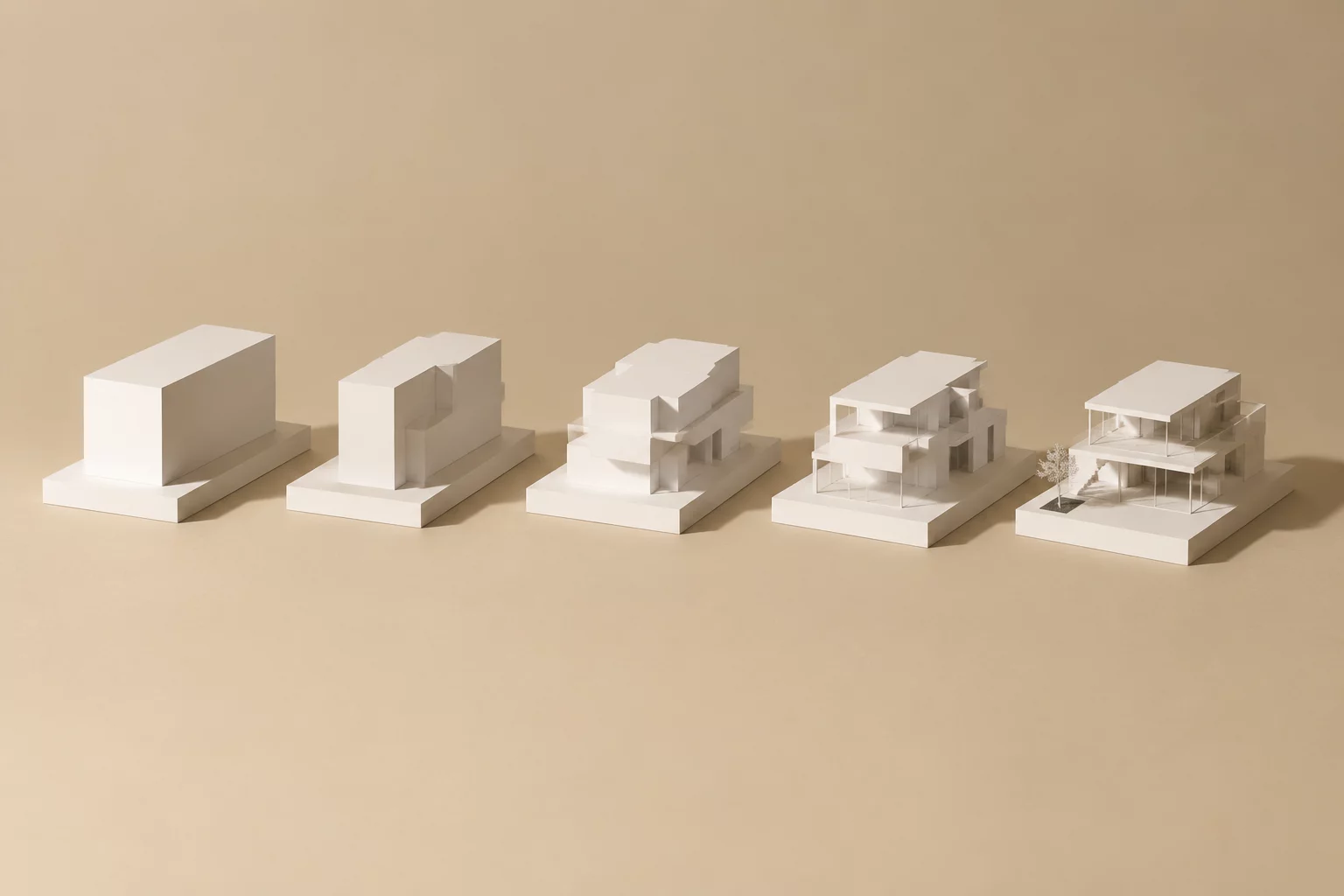
The intention was written at briefing in one sentence: the building should feel held beneath a single sheltering plane. At concept stage that sentence became a drawn gesture — a continuous roof floating above a loose arrangement of volumes. At developed design it became a structural strategy. In documentation it became a family of details. On site it became a sequence of procurement decisions.
The trace shows a pattern this journal sees across many projects: intent rarely dies in a single blow. It erodes at stage boundaries, in the weeks when a project changes hands, format, and vocabulary. The archive records each boundary crossing explicitly.
Stage Gate Review Record
- 01. Concept → DD: Roof edge thickness queried; gesture preserved by thinning the structure, not the reading.
- 02. DD → Documentation: Plane continuity threatened by a services zone; resolved by rerouting rather than perforating.
- 03. Documentation → Site: Steel substitution proposed for cost; accepted only after shadow-line mock-up proved equivalence.
Characteristic Drift Patterns
Each stage has its own way of forgetting. Concept teams drift toward expression — the roof grew more dramatic and less buildable until the structure review reset it. Documentation teams drift toward compliance — fire-stopping details nearly introduced a visible break in the plane, solved by moving the break into the section where it could not be read. Site teams drift toward substitution — a cheaper purlin profile that would have telegraphed as a second, unintended line on the ceiling.
“Design intent does not defend itself. At every stage boundary someone has to ask the same unfashionable question: does this still do the thing we promised it would do?”
The guard against drift was mundane and repeatable: at each stage gate, the concept sentence was read aloud against the current drawings. Not interpreted — read. When the drawings no longer answered it, the drawings changed or the sentence was consciously amended. Either way, the change was visible.
Carrying Intent Across the Handover
The project institutionalised the trace so later readers could audit it:
- One-sentence intent statement pinned at the front of every drawing set and spec volume.
- Stage-gate minutes recording what was defended and what was conceded, with reasons.
- Substitution register requiring every proposed swap to argue equivalence against intent.
- A closing audit comparing the occupied building against the brief sentence, photograph by photograph.
Across five stages the roof plane was drawn, engineered, specified, value-engineered, and built — and the idea arrived intact not because it was protected from change, but because every change had to account for it.

Contribute to the Architectural Discourse
Your comment will be verified by our editorial board before publication.